
Update: The link to the Good Weekend story is no longer active. To find the article, you’ll need to use the Advanced Search function at Press Display. The date you need 5 May 2012 in Good Weekend, and just search for Meryl Dorey in the body of the article. You’ll still need to pay, unfortunately.
This weekend’s Good Weekend magazine (paywall) has a story by Benjamin Law titled Adverse Reactions. At first sight, it looks as though it’s going to be a profile of Meryl Dorey from the discredited AVN, including benign photo. But it turns out to be a well-written and well-researched piece that eventually puts Meryl in her place. There’a some good background on the reality behind the MMR scare, and although Meryl’s views get more attention than I’d like, Benjamin is obviously not a subscriber to the usual depressing false balance nonsense of the mainstream media. Read more…
According to the Sydney Morning Herald, the Australian Government plans to cut subsidies to a “range of natural therapies that have not been shown to be clinically effective”. The list includes aromatherapy, ear candling, crystal therapy, flower essences, homeopathy, iridology, kinesiology, reiki and rolfing, but exactly what will be cut will depend on a review by the Chief Medical Officer, Professor Chris Baggoley. About time!
Many of these therapies are subsidized via the private health insurance rebate. I hope other holders of private health insurance have done as I have and complained to their insurers about part of their premiums being wasted on these useless techniques. Now, hopefully, we might see some action.
The government has apparently quarantined the ‘mainstream’ therapies from the cuts, and unfortunately this category includes acupuncture and chiropractic. Doesn’t Professor Baggoley get to investigate whether these are clinically effective? Who’s responsible for deciding in advance that acupuncture, for example, is clinically effective, and on what evidence?
 |
If you find yourself hoping a model is true instead of judging the evidence, show yourself a red flag. |
How to recognise this tactic
We all fall victim to this tactic because we use it on ourselves. We like to believe things that conform with our wishes or desires, even to the extent of ignoring evidence to the contrary.
Science is the one domain in which we human beings make a truly heroic effort to counter our innate biases and wishful thinking. Science is the one endeavor in which we have developed a refined methodology for separating what a person hopes is true from what he has good reason to believe.
Sam Harris, American neuroscientist and author, 2007
Whenever a group of people “desperately wants to believe” something, there will always be someone willing to tell them what they want to hear, whether the opportunists are charlatans or simply nutjobs.
Barry Bickmore, American geochemist, 2012
The ABC in Australia showed “I Can Change Your Mind About Climate Change” last night. One of the ‘respected’ experts called in by Nick Minchin was Mark Morano who proceeded to deliver one of the best example of Gish Gallop I’ve seen for a long time. If you’d like to look, it’s available (to Australian audiences, anyway) at iView for the next two weeks, and the bit I’m referring to is at the 35 minute mark.
Graham Readfearn has a post on this, with replies to Morano’s PRATT,
Update 2012/10/05: Here’s the Morano segment, proudly posted by a denier. The Gish Gallop starts at about 1:40.
|
If it’s presented as a case of black and white, it’s more likely to be red – a red flag. |
How to recognise this tactic
In this tactic, people assert that there are only two possible (and usually opposite) positions to choose from, when in fact there are more. They try to argue that if one position is shown to be false, then the other must be correct.
When people thought the earth was flat, they were wrong. When people thought the earth was spherical, they were wrong. But if you think that thinking the earth is spherical is just as wrong as thinking the earth is flat, then your view is wronger than both of them put together.
If there’s one media tactic that’s more misleading than the mantra of false balance, it’s got to be the total lack of any balance at all. Last night’s Media Watch covered the visit to Australia of “Dr. Germ”, who did the rounds of the commercial media promoting the use of chlorine bleach to rid our homes of nasties. The fact that his visit was arranged by the makers of White King bleach was revealed by some of the media outlets, but not all. And only Esther Han in The Sydney Morning Herald and Media Watch itself actually sought out some evidence from other experts. They pointed out, as you’d expect, that Dr. Germ was out of line and promoting practices that should not be recommended.
Nice work both Esther and the Media Watch team.
|
If you’ve heard it all before, and it sounds simple and clear-cut but feels fishy, it’s probably a red flag. |
How to recognise this tactic
In this tactic, people persist in repeating claims that have been shown over and over to have no foundation. Look for slogans, sweeping statements or claims that look as though they could easily be refuted. Those who use this tactic pick arguments that look reasonable at first sight or are popularly thought to be true. This tactic is simply a form of lying, but when you’re not expert in a field, it’s hard to spot arguments that have been debunked by the evidence.

Last night, Lateline ran a program that covered brain development in young children and some early-intervention programs supposedly based on findings in neuroscience. Right after that segment, Emma Alberici introduced Federal Education Minister Peter Garrett. Her first question was:
Now the scientific research is clear and unchallenged that every child should be in a pre-school by the age of three and it should be provided by the state. Why aren’t we doing that in Australia?
Now, it’s probably not fair to blame Emma for such nonsense. She was no doubt reading a prepared script. But what does that say about the standard of scientific literacy at the ABC? Read more…
 |
Let’s check the science: Is clove oil the panacea for cleaning up household mould? |
Summer’s over, and in my part of the world it’s time to clean the mould from the doors after the heat and humidity of the wet season. It seems to grow only on the doors and other panels that painted with high-gloss paint.
I’m told I should use clove oil in water to kill the mould. After the Brisbane floods last year, it was all the rage for cleaning up waterlogged houses. Apparently suppliers could not keep up with the demand, and the price went through the roof. Clove oil is now regarded as the magic solution for cleaning up mould. Is this justified?
|
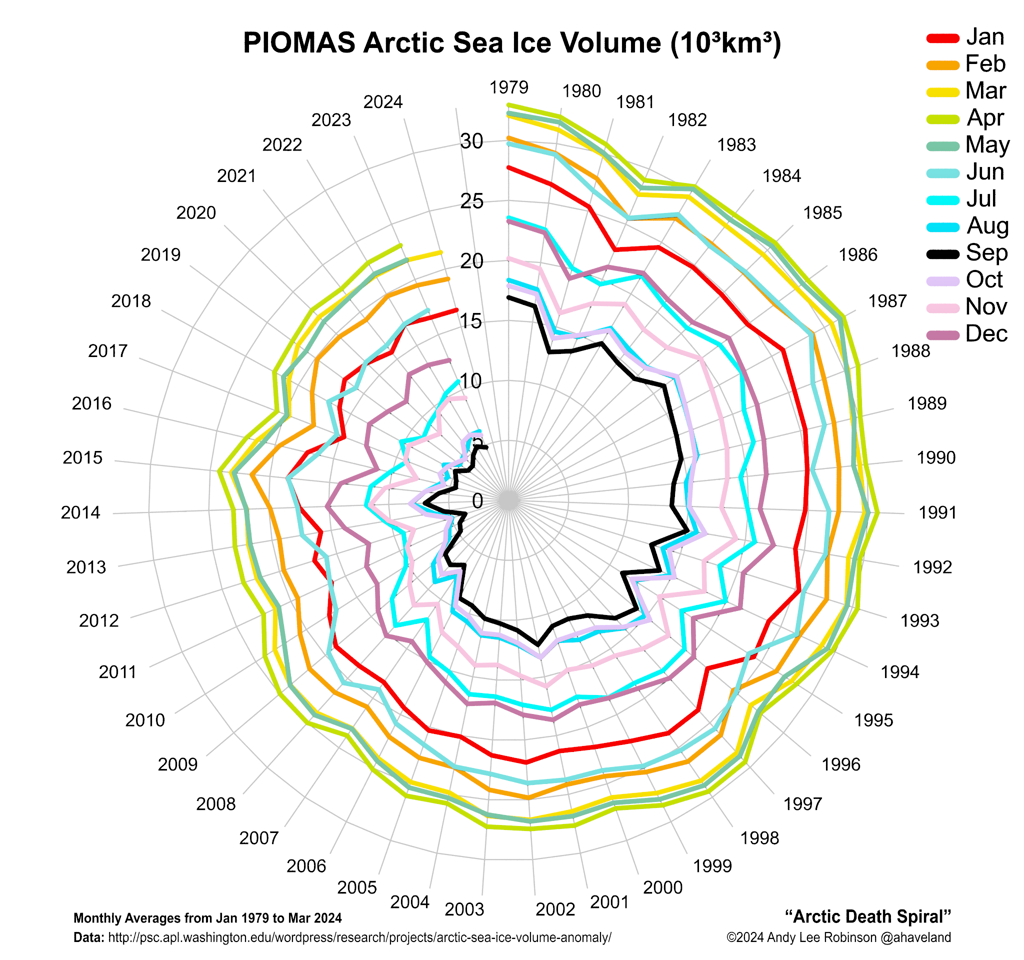
We expect scientists to tell the truth: when someone selects only a small part of the whole truth, that’s a red flag |
How to recognise this tactic
In cherry-picking, people use legitimate evidence, but not all of the evidence. They select segments of evidence that appear to support their argument and hide or ignore the rest of the evidence which tends to refute it.
Choosing to make selective choices among competing evidence, so as to emphasize those results that support a given position, while ignoring or dismissing any findings that do not support it, is a practice known as “cherry picking” and is a hallmark of poor science or pseudo-science.




 Science or not?