

This is my kind of history course. It’s called Big History, it’s intended for high school students, and it spans the 13.7 billion years from the Big Bang to the present. Here’s an overview of the course, taken from the teachers’ guide. Read more…
A scientific model can be relied on when it’s had its tyres kicked, its log book examined, its mechanics tested, its body checked and it’s been taken for many test-drives.
 |
This is one of ScienceOrNot’s Hallmarks of science. See them all here. |
In short…
Scientists have most confidence in models that have been tested from as many different angles as possible. The great bulk of established scientific knowledge consists of such models. Much of the work at the frontiers of science consists of performing additional tests on the more sparsely-supported models.
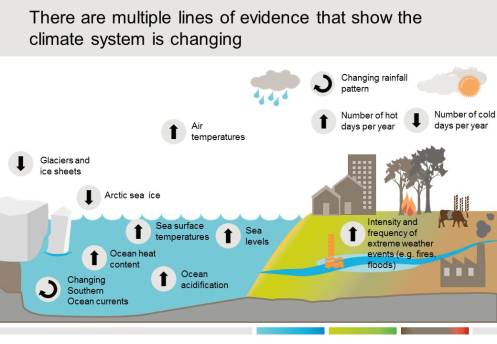
In order to reach a reliable conclusion about how the world operates it is better to have multiple independent lines of evidence converging on one conclusion. That, of course, requires multiple studies.
Steven Novella, American neurologist, 2012.

A new study from researchers at the University of California Santa Barbara (available here) has found that if you are in a scientific frame of mind, your behaviour is more likely to be morally sound. The experiments used priming techniques to study responses of subjects to moral issues. In the words of the scientists:
Taken together, the present results provide support for the idea that the study of science itself–independent of the specific conclusions reached by scientific inquiries–holds normative implications and leads to moral outcomes.
The paper itself is concise and not difficult to understand, but if you’d like a more digestible summary, there’s an article at Scientific American.
A group of young scientists from the University of Queensland has started a petition to improve coverage of science in radio news bulletins. They are targeting Triple J, Australia’s publicly-owned youth radio network. Here’s the wording:
We, the undersigned, believe that science deserves equivalent representation to that of politics, culture, breaking news, and sport. We believe that science is both interesting and relevant, and meaningfully contributes to our understanding of the world (and universe) around us. Therefore, we hereby petition Triple J (Australia’s publicly owned youth radio station) to include an ‘In science’ report in their hourly news updates, of one or more contemporary and current science news items and of at least 20 seconds duration.
It sounds like a perfectly good cause to me. You can sign the petition here.
Ten reasons why Australia urgently needs a space agency
By Andrew Dempster at The Conversation.
There is a hole in the Australian public administration where a space agency should be. That was the clear lesson from the Australian Space Research Program (ASRP) project delivered at the end of June this year…

Read the full article at The Conversation.
Photo: NASA
Ruby Hamad in the Sydney Morning Herald (here) decides to spread a swarm of wrong ideas about how science works. There’s the old furphy of implying that science is just another religion, together with the one about science always getting things wrong because later science contradicts earlier findings.
I particularly like this line:
So often has this been repeated by certain scientists, it has seeped into the popular consciousness to be accepted as cold, hard fact.
My feeling is that the “seeping” of fringe scientific ideas into the popular consciousness is mainly due to scientifically-illiterate media which try to sensationalise them regardless of their lack of acceptance by the mainstream scientific community. Read more…
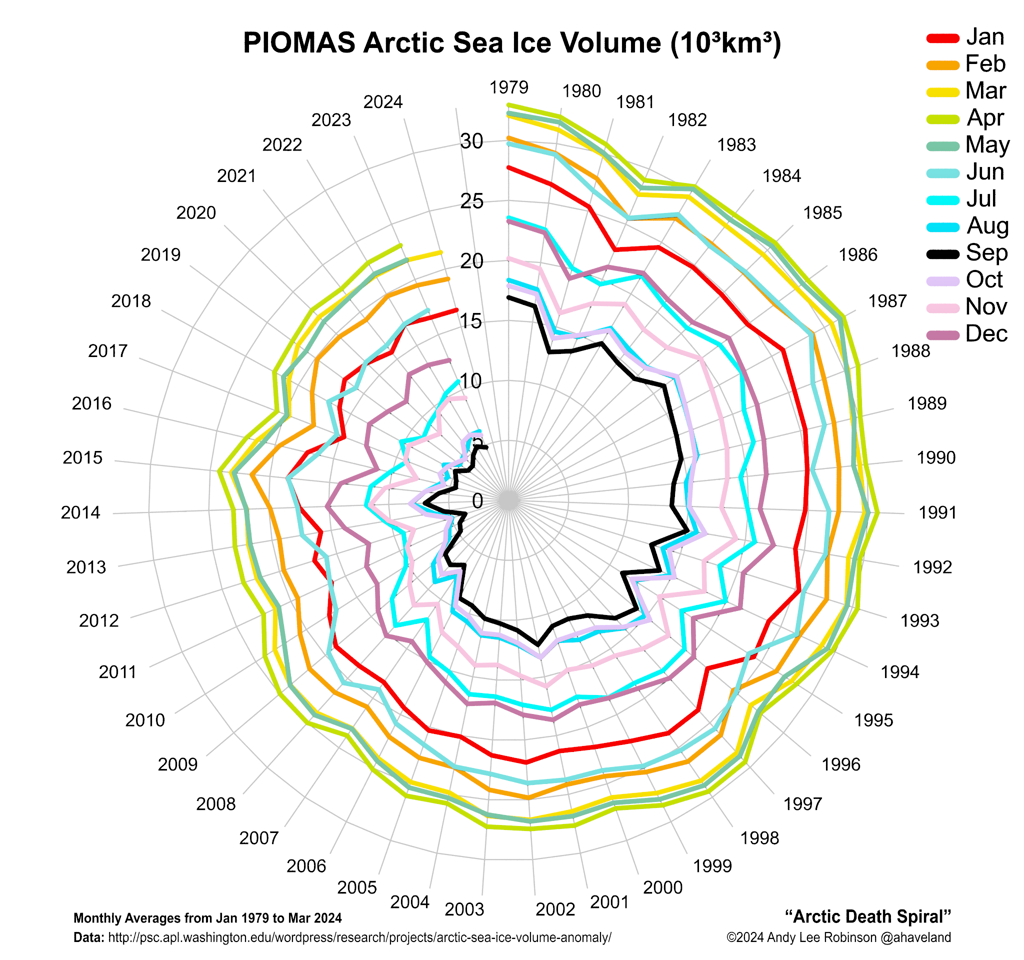
You may have noticed the Arctic Death Spiral graphic that’s been added to the right-hand column. The small version there is a bit hard to read, but if you click on it, you’ll get a larger view. This great resource was created by Andy Lee Robinson to show how dramatically we have lost ice from the Arctic region since 1979. He updates the graphic as new PIOMAS data becomes available each month.
Andy has also produced videos showing the data being traced year by year for each month. These are fascinating because the audio track follows the data, so you can hear the ice volume spiraling down in addition to seeing it.
Have a look at the May 2013 versions for yourself. The synthesizer version ….
or the piano version ….

The journal Anesthesia and Analgesia has just published pro and con articles on the use of acupuncture for pain relief. Full versions of both papers are on the journal website. The pro paper (Acupuncture in 21st Century Anesthesia: Is There a Needle in the Haystack?) is very appropriately titled. The authors certainly seek out some pretty well-hidden needles. The authors of the con paper (Acupuncture Is Theatrical Placebo), David Colquhoun, of DC’s Improbable Science and Steve Novella, of Science-Based Medicine, conclude that there has been enough testing of acupuncture to warrant it being abandoned.
It’s worth reading both articles to see how public opinion of scientific issues can be hijacked by the use of red flag tactics.
Hat tip to DC’s Improbable Science.
 |
I have evidence that confirmation bias is a red flag, so don’t try to convince me otherwise. |
How to recognise this tactic
This is a cognitive bias that we all suffer from. We go out of our way to look for evidence that confirms our ideas and avoid evidence that would contradict them.

Just in case anyone had any lingering doubts that The Australian newspaper has completely lost credibility when it comes to science, environment editor Graham Lloyd delivers the decisive blow (paywall). Check out the full story at either of these:
Graham Readfearn: The Australian Brings You The Climate Science Denial News From Five Years Ago
Watching The Deniers: Of Ice Ages, The view from nowhere and the value of one’s soul: Graham Lloyd, The Australian and the repackaging of fringe science
Lloyd is using false balance to the ultimate. It amazes me that a seasoned journalist can willingly accept becoming a laughing-stock just to remain in the Murdoch stable. What must the culture in that organisation be like? Read more…




 Science or not?